
surgical guide dental code
Surgical guide dental codes are essential for accurate billing; codes like D7290, D6194, and D6190 facilitate proper reimbursement for these vital dental procedures.
Understanding these codes ensures compliance and appropriate financial recognition for the precision offered by surgical guides in modern dental practice.
What is a Surgical Guide?
A surgical guide is a meticulously crafted tool utilized during dental implant surgeries and other intricate oral surgical interventions. Its primary function is to guarantee the precise placement of implants or incisions, enhancing accuracy and predictability. These guides, often fabricated using CAD/CAM technology, are custom-designed based on detailed patient imaging and treatment planning.
Essentially, a surgical guide acts as a stencil, directing the surgeon to drill at the correct angle, depth, and position. This minimizes the risk of damaging adjacent structures like nerves or sinuses. The fabrication process itself is often associated with code D7290, while its utilization in the operating room falls under code D6194. Proper understanding of these codes is crucial for appropriate billing.
Surgical guide design is a critical step in modern implant dentistry.
The Importance of Accurate Coding
Accurate coding for surgical guides is paramount for several reasons, extending beyond simple reimbursement. Correct application of dental codes – such as D7290 for fabrication and D6194 for placement – ensures compliance with insurance regulations and avoids potential audit issues. Furthermore, precise coding reflects the complexity and skill involved in creating and utilizing these guides.
The ADA continually updates its CDT Codes, necessitating ongoing education for dental professionals. Utilizing the correct code accurately portrays the services rendered, supporting fair compensation for the value provided to the patient. Misunderstandings or improper coding can lead to claim denials and financial losses. Staying current with these updates, like those found in the CDT 2014 book, is vital.
Proper coding supports the long-term viability of implant dentistry.
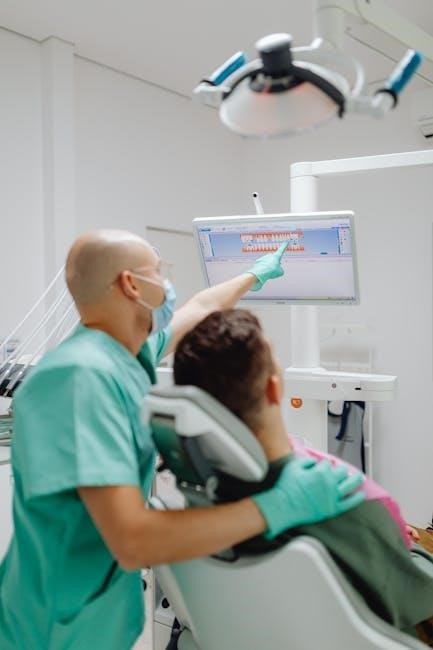
Key Dental Codes for Surgical Guides
Key codes include D7290 for surgical guide fabrication, D6194 for placement, and D6190 for necessary radiographic or clinical documentation during the procedure.
D7290: Fabrication of a Surgical Guide
Code D7290 specifically covers the fabrication of a surgical guide, a crucial component in modern dental implantology and oral surgery. This code represents the laboratory work and materials involved in creating a custom-designed guide.
The surgical guide is typically created using digital imaging, such as CBCT scans, and CAD/CAM technology, ensuring precise implant placement. It’s essential to document the complexity of the guide, as the fee associated with D7290 reflects the skill and technology utilized.
Proper documentation supporting the use of D7290 should include details about the guide’s design, the imaging used, and the materials employed. Accurate coding for fabrication is vital for appropriate reimbursement and reflects the value of this precision tool.
D6194: Placement of a Surgical Guide
Dental code D6194 pertains to the clinical placement of a surgical guide during a dental implant or oral surgery procedure. This code acknowledges the chair-time and clinical expertise required to accurately seat and utilize the guide during the surgical process.
The placement involves verifying the guide’s fit, ensuring proper stability, and utilizing it to direct the osteotomy preparation for implant placement. Documentation should clearly indicate the surgical guide was used to aid in precise implant positioning.
D6194 is often used in conjunction with D7290 (fabrication) and implant placement codes. Accurate application of this code is crucial for reflecting the enhanced precision and predictability offered by surgical guide technology.
D6190: Radiographic or Clinical Documentation
Dental code D6190 covers the necessary radiographic or clinical documentation supporting the use of a surgical guide. This encompasses pre-operative imaging – typically a CBCT scan – used for treatment planning and surgical guide fabrication. It also includes clinical records detailing the guide’s design, fabrication process, and its utilization during surgery.
Proper documentation demonstrates the rationale for using a surgical guide, the precision achieved, and adherence to best practices. This code acknowledges the time and effort invested in comprehensive record-keeping.
Thorough documentation is vital for insurance claims and legal defensibility, showcasing the meticulous approach to implant placement facilitated by surgical guide technology.
Implant-Related Codes & Surgical Guides
Dental implant procedures, like D6010, often integrate with surgical guide usage; accurate coding reflects the combined treatment for optimal implant placement.
D6010: Implant Placement – Standard Diameter
Code D6010 specifically covers the placement of endosseous implants with a standard diameter, generally 3.0mm or greater. When a surgical guide is utilized in conjunction with this procedure to enhance precision and accuracy, it’s crucial to remember that D6010 represents the implant placement itself.
The fabrication and placement of the surgical guide are billed separately using codes D7290 and D6194, respectively. This distinction is vital for correct claim submission and avoiding denials. Documentation should clearly indicate the use of a surgical guide and its role in achieving the desired implant position.
Practitioners must ensure comprehensive record-keeping, detailing the implant diameter and the surgical guide’s contribution to the successful outcome. Proper coding reflects the comprehensive nature of implant dentistry.
Codes for Different Implant Sizes
Beyond the standard D6010 code, implant placement coding adjusts for varying diameters. When implants deviate from the 3.0mm+ standard, additional codes come into play to accurately reflect the service provided, even when a surgical guide is employed.
Smaller diameter implants necessitate different codes, ensuring appropriate reimbursement based on the complexity and material costs. The use of a surgical guide doesn’t alter these implant-specific codes; it remains a separately billable component (D7290 & D6194).
Detailed documentation specifying the implant diameter is paramount. Accurate coding, alongside clear notes about the surgical guide’s role, streamlines the claims process and supports proper payment for comprehensive implant procedures.

Technological Advancements & Coding
CAD/CAM technology drives surgical guide precision, but coding remains focused on the procedure itself (D7290). Patents, like CHROME GuidedSMILE, don’t change code usage.
CAD/CAM Technology in Surgical Guide Creation
CAD/CAM (Computer-Aided Design/Computer-Aided Manufacturing) has revolutionized surgical guide fabrication, enabling unparalleled precision in implant planning and execution. This technology allows for the creation of customized guides tailored to each patient’s unique anatomy, significantly improving implant placement accuracy.
Despite these advancements, the fundamental coding for surgical guides remains centered around the procedural aspects. Code D7290, specifically, covers the fabrication of the surgical guide itself, regardless of whether it’s created using traditional methods or cutting-edge CAD/CAM systems. The complexity or sophistication of the technology employed doesn’t alter the applicable code.
Therefore, while CAD/CAM enhances the quality and predictability of surgical guides, the billing process continues to rely on established dental procedure codes, ensuring consistent and standardized reimbursement practices.
Patents and Intellectual Property (e;g., CHROME GuidedSMILE)
The increasing innovation in surgical guide technology, exemplified by systems like Watson Guide IP’s CHROME GuidedSMILE, highlights the importance of intellectual property protection within the dental field. These patented technologies often represent significant advancements in precision and efficiency.
However, the existence of patents doesn’t directly impact the coding process for surgical guides. Regardless of whether a guide utilizes patented technology, the standard dental codes – primarily D7290 for fabrication – still apply. Billing remains focused on the procedure performed, not the specific brand or innovation employed.
Therefore, while advancements like CHROME GuidedSMILE drive progress, the surgical guide dental code framework remains consistent, prioritizing procedural accuracy in reimbursement.
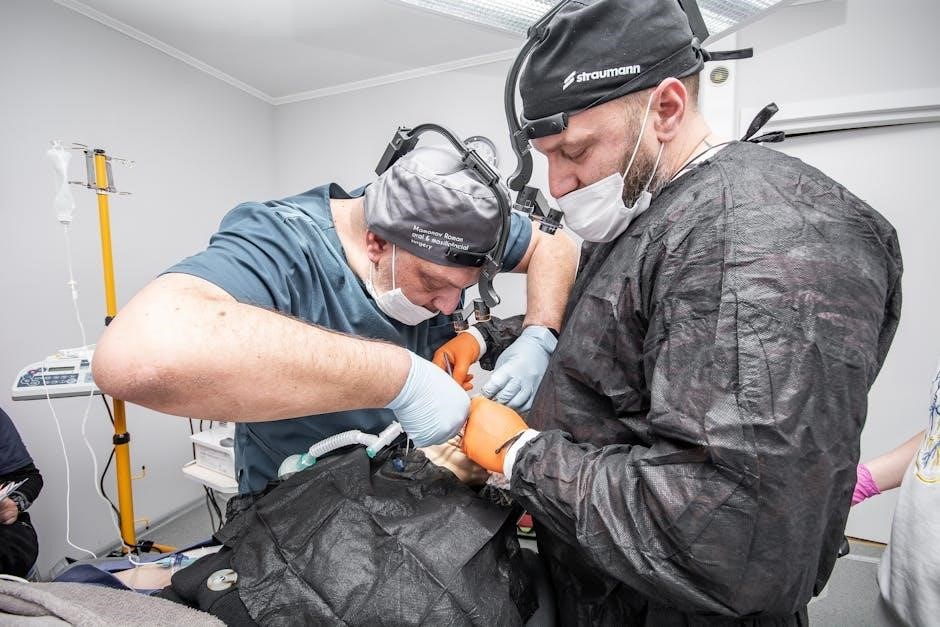
Specific Applications & Coding Considerations
Surgical guide applications, from single-tooth to full-arch cases, utilize the same core dental codes (D7290, D6194, D6190), though complexity may influence treatment planning.
Surgical Guides for Full-Arch Implant Cases
Dental surgical guides for full-arch implant cases demand meticulous planning and execution, directly impacting coding accuracy. Typically, code D7290 (Fabrication of a Surgical Guide) is utilized, reflecting the increased design complexity and fabrication time compared to single-tooth guides.
The comprehensive nature of full-arch restorations often necessitates multiple guide sections or a single, extensive guide, potentially influencing the overall fabrication cost and, consequently, the billed amount under D7290. Furthermore, code D6194 (Placement of a Surgical Guide) applies during the surgical phase, regardless of the arch scope.
Accurate radiographic or clinical documentation, essential for full-arch procedures, is billed using code D6190. Proper documentation supports the medical necessity and justifies the use of the surgical guide, ensuring appropriate reimbursement and audit compliance.
Surgical Guides for Single-Tooth Implants
Coding for surgical guides used in single-tooth implant placement generally involves code D7290 for fabrication. While seemingly straightforward, accurate documentation is crucial to justify the guide’s necessity, especially when compared to freehand implant placement.
The complexity of the guide – whether it’s a simple, single-use guide or a more intricate design – doesn’t typically alter the base D7290 code, but detailed notes regarding design time are beneficial. Code D6194 covers the placement of the guide during surgery, and D6190 addresses any required radiographic or clinical documentation.
Practitioners should ensure the documentation clearly demonstrates the benefit of using a surgical guide for precision and optimal implant positioning in single-tooth cases, supporting appropriate claim adjudication.
Coding for Overdentures with Implant Support
Overdenture coding requires careful attention; utilize appropriate codes for both implant placement (D6010) and the surgical guide (D7290/D6194) used during the procedure.
Overdenture Coding Guidance
Overdenture coding, particularly when utilizing implant support, demands meticulous attention to detail and a thorough understanding of the Current Dental Terminology (CDT) codes. When a surgical guide is fabricated and utilized for precise implant placement supporting an overdenture, code D7290 (Fabrication of a Surgical Guide) is crucial for accurate billing.
Furthermore, code D6194 (Placement of a Surgical Guide) should be included to reflect the clinical step of utilizing the guide during the implant surgery. Remember to also appropriately code the implant placement itself, such as D6010 for standard diameter implants. Accurate documentation linking the surgical guide to the overdenture case is paramount for successful claim submissions and avoiding denials.
Properly documenting the relationship between the surgical guide, implant placement, and the final overdenture restoration ensures appropriate reimbursement and reflects the comprehensive care provided to the patient.
Coding Anterior Tooth Restorations
When a surgical guide facilitates precise implant placement for anterior tooth restorations, accurate coding is vital. While the surgical guide itself is coded using D7290 (Fabrication) and D6194 (Placement), the subsequent restorative work requires separate codes. These codes depend on the type of restoration – crown, veneer, or fixed partial denture – and the surfaces involved.
Remember to code the restoration based on the surfaces restored (mesial, distal, occlusal, incisal) and material used. The “Guide to Coding Anterior Tooth Restorations” provides detailed guidance on surfaces and the incisal angle. Linking the implant placement (D6010 or similar) to the final restoration code demonstrates a complete treatment plan.
Thorough documentation connecting the surgical guide to the restorative phase ensures appropriate reimbursement and a clear audit trail.

The Role of Static Computer-Assisted Implant Surgery (sCAIS)
In sCAIS, a digitally planned and fabricated surgical guide (SG) is crucial; coding reflects the SG’s fabrication (D7290) and placement (D6194) for precision.
The Crucial Role of the Surgical Guide (SG)
The surgical guide (SG) is paramount in static computer-assisted implant surgery (sCAIS), ensuring accurate implant placement based on pre-operative digital planning. Proper coding for the SG is therefore critical, encompassing both its fabrication – typically using code D7290 – and its clinical application with code D6194.
Accurate coding reflects the significant time and technological investment involved in creating these customized tools. The SG’s design process, often utilizing CAD/CAM technology, translates a virtual plan into a physical aid, minimizing surgical deviations. Furthermore, appropriate documentation, potentially utilizing code D6190, supports the medical necessity and justifies the procedure’s cost. Without precise coding, the value of this advanced technique may be underestimated.
Ultimately, the SG’s role extends beyond mere guidance; it represents a commitment to predictable and efficient implant outcomes, and coding must accurately reflect this.
Updates to CDT Codes
The ADA’s CDT 2014 book is the official resource for dental procedure codes, helping practitioners stay current with proper billing for surgical guides.
Regular updates ensure accurate coding practices and appropriate reimbursement for these increasingly common implant-related procedures.
The CDT 2014 Dental Procedure Codes Book
The CDT 2014 Dental Procedure Codes book represents the sole official source for dental procedure coding, and is crucial for accurately documenting and billing for services involving surgical guides.
This comprehensive resource provides detailed descriptions and codes applicable to the fabrication and placement of these guides, ensuring compliance with dental insurance requirements. It’s essential for practitioners to utilize this book when determining the appropriate code – such as D7290 for fabrication or D6194 for placement – to avoid claim denials.
Furthermore, the book clarifies nuances in coding, particularly as they relate to implant-supported restorations and complex surgical cases. Staying updated with the CDT manual is paramount for maintaining accurate financial records and receiving appropriate reimbursement for the specialized services provided with surgical guide technology.
Staying Current with ADA Coding Updates
Maintaining awareness of updates from the American Dental Association (ADA) regarding surgical guide coding is vital for accurate billing and compliance. The dental landscape evolves, and coding guidelines are periodically revised to reflect advancements in technology and treatment modalities.
Regularly checking the ADA’s website and publications ensures practitioners are utilizing the most current codes, like D7290 and D6194, and avoiding potential claim rejections. These updates often clarify ambiguities or introduce new codes to address emerging procedures.
Proactive engagement with ADA resources minimizes errors and maximizes reimbursement for services involving surgical guides, ultimately contributing to the financial health of the dental practice.
Manufacturers and Suppliers
AD Surgical and Applied Dental (EZ Stent), Dentakay, and Surgical Guide Services are key providers of surgical guides, impacting dental coding practices.
AD Surgical and Applied Dental (EZ Stent)
AD Surgical, alongside its affiliated company, Applied Dental, has significantly impacted the surgical guide market with its EZ Stent product. This thermoplastic surgical guide is specifically designed for use in dental implant surgery, offering a reliable and accurate solution for practitioners.
Previously distributed by Straumann, AD Surgical now directly markets EZ Stent, ensuring greater control over distribution and support. The availability of EZ Stent directly influences surgical guide dental coding, as its utilization necessitates the correct application of codes like D7290 for fabrication and potentially D6194 for placement.
The EZ Stent’s design and functionality contribute to streamlined implant procedures, ultimately affecting the billing process and the appropriate dental codes used to reflect the services rendered.
Dentakay and Surgical Guide Services
Dentakay, a well-established dental clinic in Istanbul, has recently expanded its offerings to include comprehensive surgical guide services. This launch directly impacts surgical guide dental coding, as the clinic now provides a full spectrum of services requiring accurate code application for billing purposes.
Their detailed services encompass the entire process, from digital planning to the physical creation and potential placement of surgical guides. This necessitates a thorough understanding of codes such as D7290 (fabrication) and D6194 (placement) to ensure compliant and accurate claims submission.
Dentakay’s commitment to advanced dental technology reinforces the importance of precise coding practices within the evolving landscape of implant dentistry.

Future Trends in Surgical Guide Coding
Future surgical guide dental coding may see new codes emerge for advanced technologies, reflecting innovations like personalized guides and digital workflows.
Adaptability to these changes is crucial for accurate billing and optimal patient care.
Potential New Codes for Advanced Technologies
The evolution of surgical guide technology suggests a need for refined dental coding. Currently, existing codes may not fully capture the complexity of advanced systems. Specifically, codes addressing digitally designed, patient-specific guides created with CAD/CAM technology could be beneficial.
Furthermore, codes differentiating between guide materials – like thermoplastic versus metal – or those reflecting the level of customization (e.g., fully guided versus partially guided) might be warranted. The increasing use of patented technologies, such as CHROME GuidedSMILE, also presents a potential justification for specialized coding.
Ultimately, the ADA’s ongoing review of CDT codes will determine if these advancements necessitate new or modified surgical guide dental codes to ensure accurate reimbursement and reflect the value of these innovative procedures.